
Equinox at Chichen Itza: What Is the Kukulkan Serpent Descent and How to See It
Every year, thousands of travelers visit Chichen Itza to witness one of Mexico’s most famous astronomical phenomena: the so-called descent of Kukulkan. During the equinoxes, the light and shadows cast across the El Castillo pyramid create the silhouette of a serpent that appears to descend the stairs. If you’re thinking about visiting Chichen Itza during this season, here we explain what the equinox is, when it occurs, and how to plan your visit to experience the phenomenon.
What Is the Equinox at Chichen Itza?
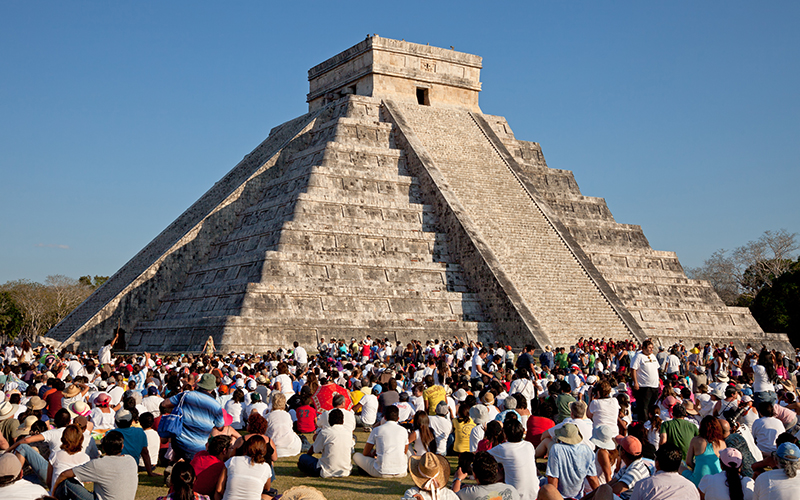
The equinox occurs when the Sun crosses the Earth’s equator, making day and night nearly equal in length. At Chichen Itza, this time of year creates an impressive interplay of light and shadow on the Kukulkan pyramid.
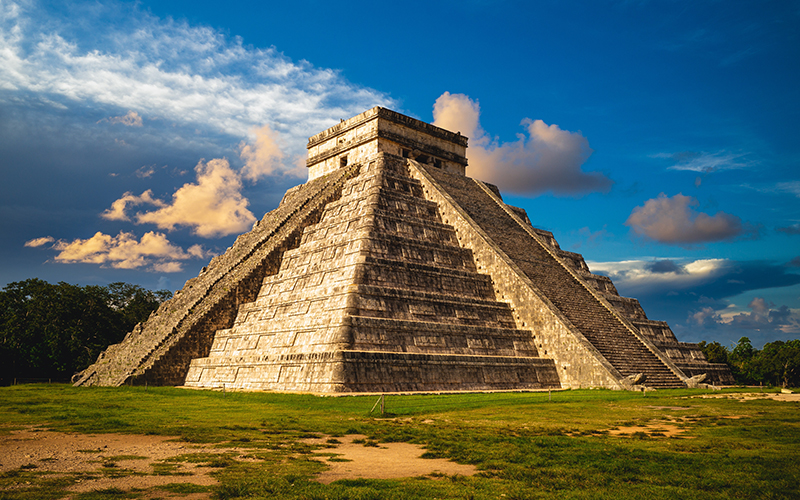
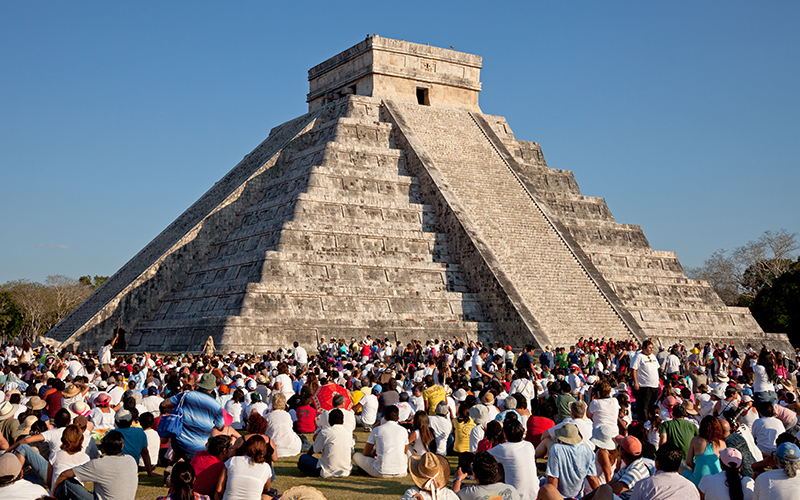
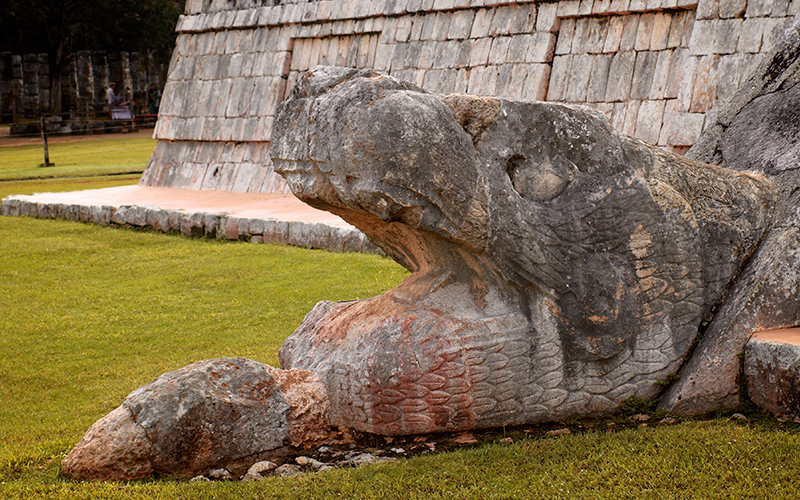
As the Sun changes position, the shadows cast by the terraces of El Castillo form a series of triangles along the northern staircase. When they visually align with the serpent’s head at the base, the effect creates the appearance of a serpent of light descending the pyramid. INAH describes this phenomenon as a hierophany, meaning a manifestation of a sacred nature.
The architecture of El Castillo also has an interesting connection to the solar calendar: each of its four staircases has 91 steps. Adding the four staircases and the upper platform gives a total of 365, associated with the days of the Maya solar calendar.
This design reflects the knowledge the ancient Maya developed about astronomy and solar cycles. If you’d like to learn more about this civilization, you can read who the Maya were.
The Myth of Kukulkan, the Feathered Serpent
For the ancient Maya, Kukulkan was a sacred figure represented as a feathered serpent, associated with the sky, the earth, and the underworld. His image symbolized the connection between these three worlds and the balance of the forces of nature.
According to tradition, Kukulkan could move between these realms, connecting what was above, in the sky, with the world of human beings and the underground world. This is why the feathered serpent became one of the most important figures in Maya culture.
At Chichen Itza, this symbolism takes on special meaning during the equinox. The light and shadows on El Castillo form a series of triangles that appear to create the body of a serpent as it descends the pyramid’s stairs, bringing the figure of Kukulkan to life before visitors.
When Is the Fall and Spring Equinox at Chichen Itza?
The phenomenon is traditionally associated with the two equinoxes of the year:
| Equinox | Approximate date | Phenomenon |
|---|---|---|
| Spring | March 20-21 | Light and shadow effect on El Castillo |
| Fall | September 22-23 | Light and shadow effect on El Castillo |
For 2026, the fall equinox will occur on September 22. However, you don’t necessarily have to travel on that exact day to try to see the effect. The phenomenon can be observed for several days around the date, although the light and shadow conditions change throughout the period. The projection along the staircase can be observed approximately between 3:00 and 5:00 p.m., although visibility depends on the lighting conditions and the time of your visit.
How to See the Kukulkan Serpent Descent Without Missing the Phenomenon
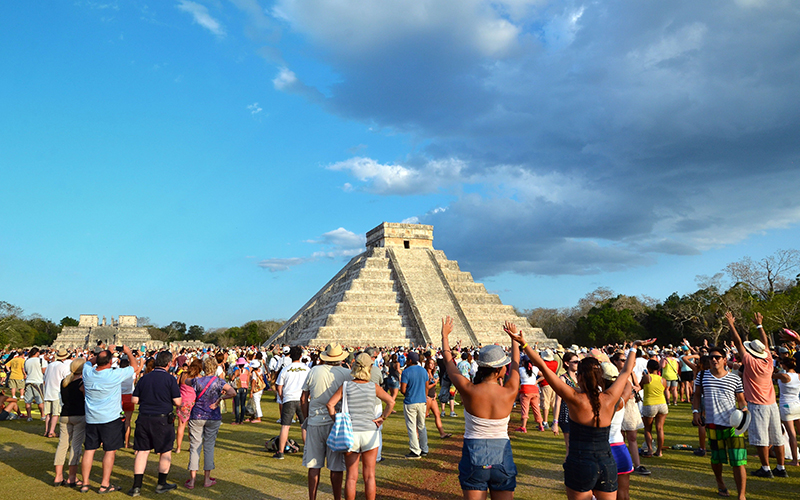
If you want to witness the descent of Kukulkan, it’s worth planning your visit in advance. During the equinoxes, Chichen Itza can receive a large number of visitors, so a few details can make a difference in your experience.
- Arrive early: attendance can be very high during the equinox dates. Arriving early will allow you to enter more comfortably and find a good spot to observe the phenomenon.
- Consider visiting the day before: the light and shadow effect can also be seen on dates close to the equinox. If you have flexibility, visiting a day earlier can help you avoid some of the crowds while still experiencing practically the same phenomenon.
- Check tickets and opening hours: special schedules and measures may be implemented during these dates to manage visitor access and exit. Check the official information before traveling.
- Choose a good viewing spot: the phenomenon can be seen along the northern staircase of El Castillo, where the shadows form the triangles of light that create the appearance of the serpent’s body.
- Bring what you need: a hat, water, sunscreen, lightweight clothing, and comfortable shoes are essential for exploring the archaeological site, especially during the hours of greatest sun exposure.
If you want to be better prepared, you can also check our tips for visiting Chichen Itza, where you’ll find practical recommendations for planning your visit and knowing what to bring. And if you’re traveling from Cancun or the Riviera Maya, a private tour to Chichen Itza can be a convenient way to arrange your transportation and enjoy the experience with greater flexibility, without having to worry about the logistics of the trip.
A Unique Phenomenon… But Not the Only One
The descent of Kukulkan is one of the most famous light and shadow phenomena associated with Maya culture, but Chichen Itza is not the only site where Maya architecture is connected to the movement of the Sun.
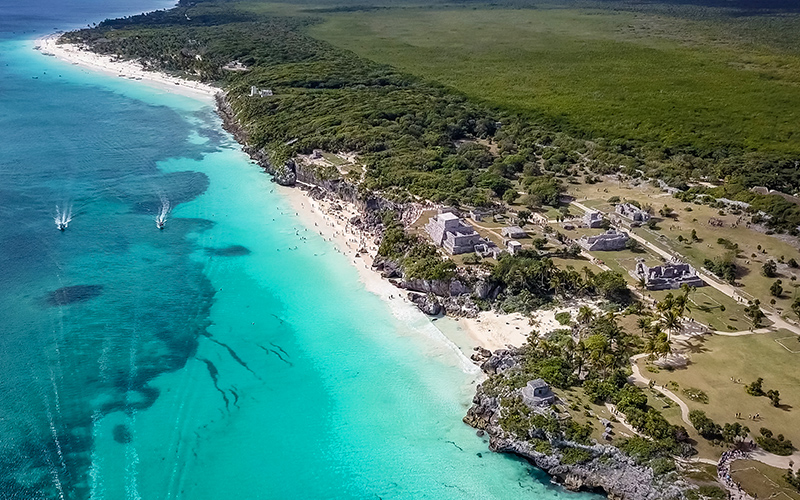
Similar phenomena have also been documented at other archaeological sites across the Yucatan Peninsula, although they are much more subtle. At Uxmal, for example, the position of the Sun can create lighting effects on certain structures, while at Tulum, the architecture and its orientation also demonstrate the importance the Maya placed on observing the sky . These phenomena, known as hierophanies, show how the ancient Maya incorporated their knowledge of the Sun and natural cycles into their architecture. That is why visiting Chichen Itza during the equinox is not only an opportunity to see a serpent-shaped shadow, but also a way to get closer to how this civilization understood and represented its relationship with the cosmos.
Frequently Asked Questions
When is the next equinox at Chichen Itza?
The next fall equinox will be on September 22, 2026. The light and shadow phenomenon can also be observed during the days around this date.
What time can you see the Kukulkan descent?
The effect can be observed approximately between 3:00 and 5:00 p.m., although visibility depends on the lighting conditions and the day of your visit.
Can you see the effect on days close to the equinox?
Yes. The phenomenon can be seen on days close to the equinox, although the shape and definition of the shadow may vary depending on the date and lighting conditions.