What Is a Cenote and How Did It Form? A Guide Before You Visit One

What Is a Cenote and How Was It Formed? A Guide to Understanding Them Before You Visit
If you're looking to discover one of the Mexican Caribbean's most extraordinary natural wonders, the cenotes of the Riviera Maya are an experience you shouldn't miss. Their crystal-clear waters, ancient caves, and lush jungle surroundings were shaped by nature over thousands of years.
In this guide, you'll learn what a cenote is, how it was formed, why it was so important to the Maya, and why places like Sac Actún and Yal-Kú are must-visit experiences during your trip to Cancún and the Riviera Maya.
What Is a Cenote?
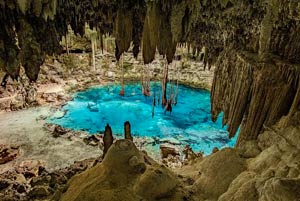
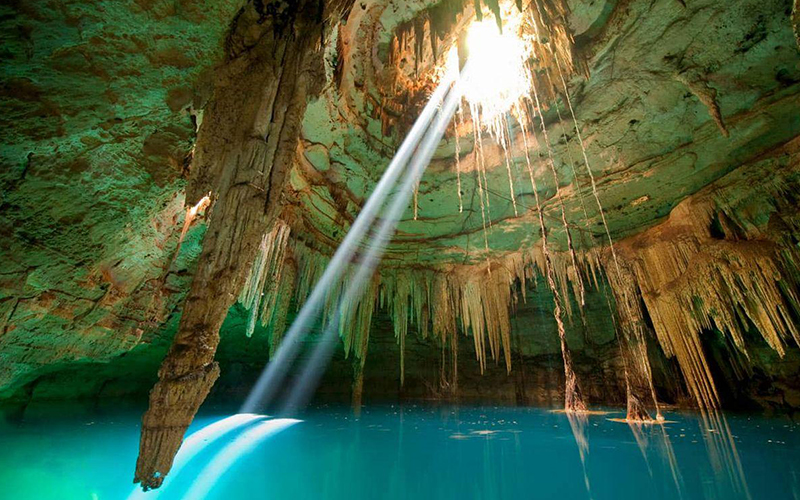
A cenote is a natural freshwater sinkhole formed within the limestone bedrock of the Yucatán Peninsula. These unique formations were created as underground water slowly dissolved the limestone over thousands of years, forming caves, caverns, and underground waterways connected to the region's aquifer.
The word cenote comes from the Maya term ts'onot (or dzonot), meaning "cavern with water." For the ancient Maya, these places were not only essential sources of fresh water but also held deep spiritual significance. Today, cenotes are among the Riviera Maya's most spectacular natural attractions, where travelers can swim, snorkel, and explore a fascinating underground world filled with history and natural beauty.
How Is a Cenote Formed?
Although today they look like hidden natural pools tucked away in the jungle, the cenotes of the Riviera Maya are the result of a natural process that took thousands of years. It all began when rainwater slowly filtered through the limestone of the Yucatán Peninsula, creating tiny cracks and underground channels.
Over time, the underground water gradually eroded the rock, forming vast caves and caverns connected to the Yucatán Peninsula aquifer, one of the world's largest underground freshwater systems. Some of these underground landscapes can still be explored today, such as Río Secreto, one of the Riviera Maya's best-known underground river systems. Eventually, parts of these cave ceilings weakened and collapsed, exposing the natural freshwater pools we now know as cenotes.
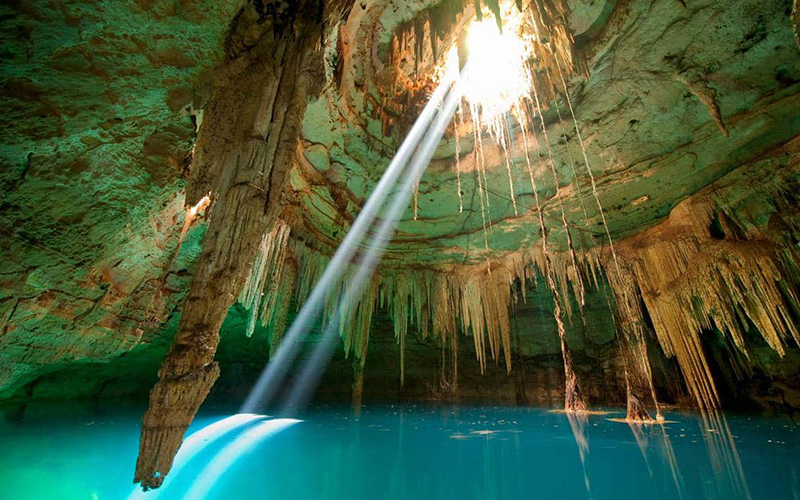
Thanks to this process, every cenote is unique. Some feature open ceilings where sunlight pours directly into the water, while others retain sections of their original caves, where stalactites, crystal-clear water, and impressive rock formations create breathtaking landscapes.
Types of Cenotes You Can Visit in the Riviera Maya
Not all cenotes are the same. Their shape, depth, and surroundings create completely different experiences, from peaceful swimming spots to exciting underground adventures.
Open Cenotes
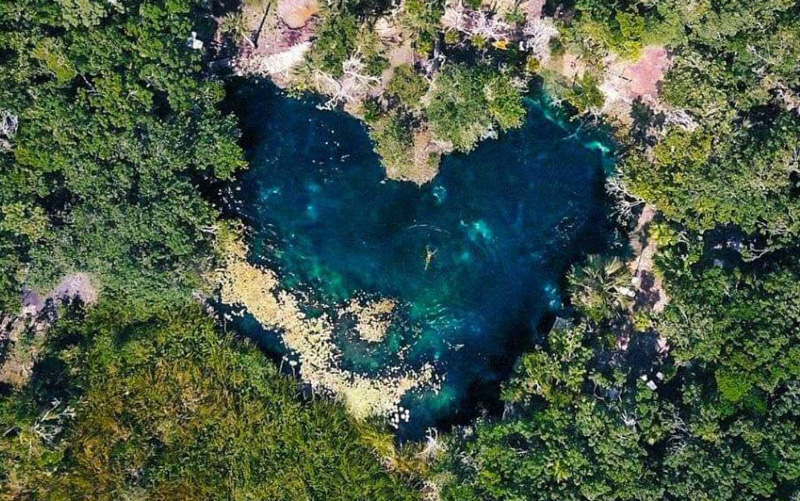
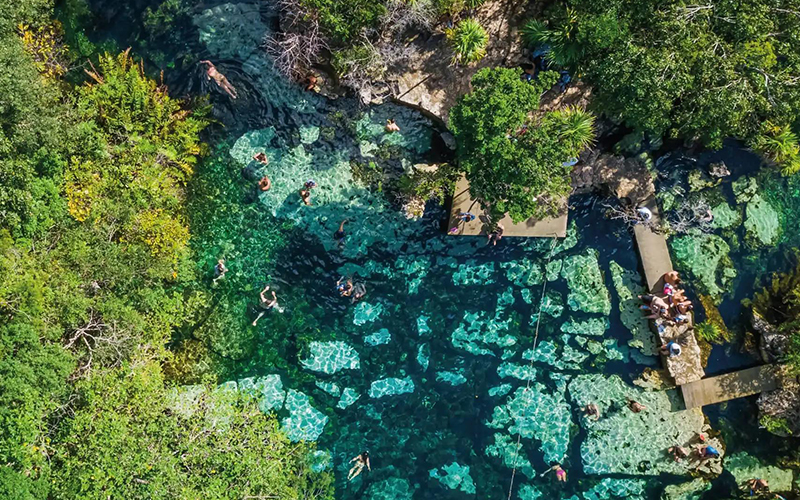
These cenotes have a completely open top, allowing natural sunlight to enter and creating spaces that feel like a natural pool surrounded by lush vegetation.
They are a great option if you want to swim, relax, and enjoy nature. You can combine this experience with Tulum, Cenote and Playa del Carmen, a tour that brings together Mayan culture, crystal-clear cenotes, and some of the Riviera Maya’s most iconic destinations.
Semi-open Cenotes
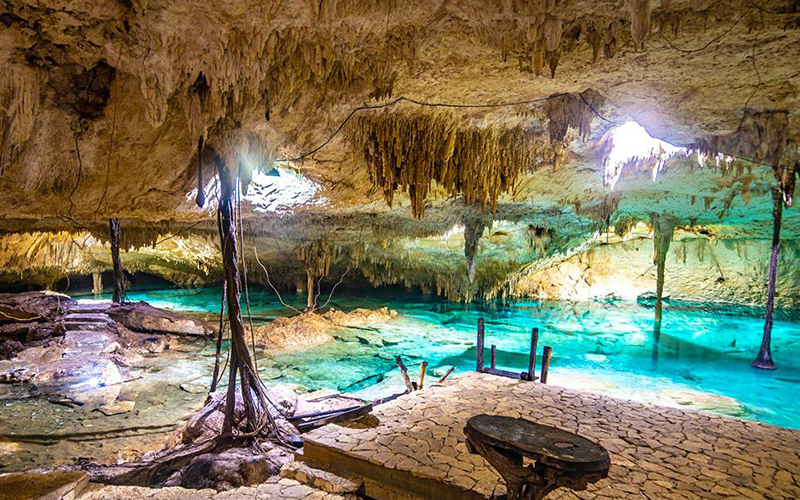
They combine open-air areas with cave sections, creating unique landscapes where natural sunlight blends with impressive rock formations.
They are a great option if you are looking for a cenote with beautiful views, want to capture amazing photos, or enjoy a different kind of experience in the Riviera Maya. You can combine this experience with Ek Balam Deluxe, a tour that brings together Mayan history, Valladolid, and a visit to a cenote surrounded by nature.
Cave Cenotes
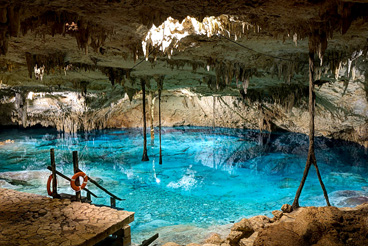
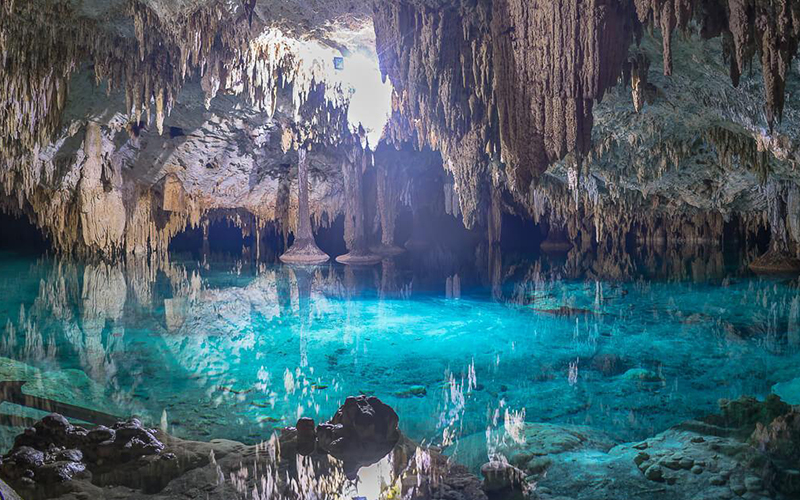
These cenotes preserve much of their underground structure, allowing visitors to discover crystal-clear waters, stalactites, and impressive rock formations created over thousands of years.
They're ideal for travelers seeking a more adventurous experience. One of the most remarkable examples is Sac Actún, where you can explore the incredible underground world of the Riviera Maya.
Dry Cenotes
Dry cenotes no longer contain visible water but still preserve fascinating rock formations that reveal how these natural landscapes have evolved over time. They're a great option for visitors interested in the geology and natural history of the Yucatán Peninsula.
What Did Cenotes Mean to the Maya?
For the ancient Maya, cenotes were much more than beautiful freshwater pools hidden in the jungle. They were essential sources of fresh water and sacred places where nature and spirituality were deeply connected.
Cenotes played a vital role in everyday life, providing water for communities while also serving as important ceremonial sites. According to Maya beliefs, some cenotes were considered gateways to Xibalba, the Maya underworld. For this reason, many were used for ceremonies and rituals connected to their spiritual traditions.
Today, visiting a cenote offers a unique opportunity to connect with both the natural beauty of the Riviera Maya and the rich history of one of Mexico's most fascinating civilizations. If you'd like to learn more about them, read our blog about who the Maya were and discover the story behind this incredible culture.
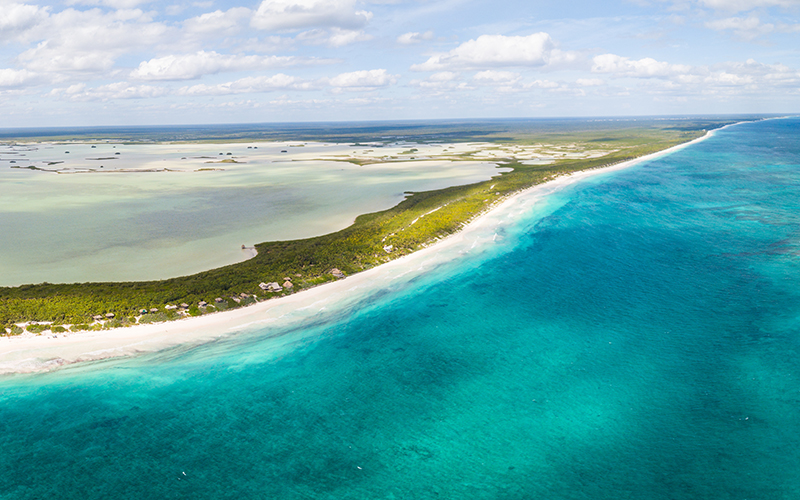
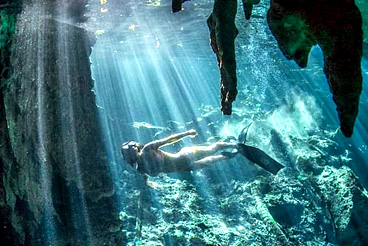
During your trip to Cancún, you can experience this connection firsthand on a private tour to Sac Actún Cenote and Yal-Kú Lagoon, where history, adventure, and the Riviera Maya's breathtaking landscapes come together. Explore a flooded cave with ancient rock formations before snorkeling in the crystal-clear waters of Yal-Kú, a natural lagoon teeming with colorful marine life.
Frequently Asked Questions
What does the word "cenote" mean?
The word cenote comes from the Maya term ts'onot (or dzonot), meaning "cavern with water." The Spanish later adapted the word into the term we use today.
Is it safe to swim in a cenote?
Yes. Most cenotes are suitable for beginner swimmers and provide life jackets and guided access. However, cave diving in deep underwater cave systems requires specialized training and certification.
What's the difference between an open cenote and a cave cenote?
An open cenote has no roof, making it similar to a natural lagoon with plenty of sunlight. A cave cenote still retains part of its ceiling, creating a more enclosed environment with tunnels, rock formations, and less natural light.
Where can I visit a cenote near Cancún?
Some of the best cenotes near Cancún are located in the Tulum and Akumal areas. Sac Actún and Yal-Kú Lagoon are among the most popular destinations for swimming, snorkeling, and discovering the natural beauty of the Riviera Maya.